
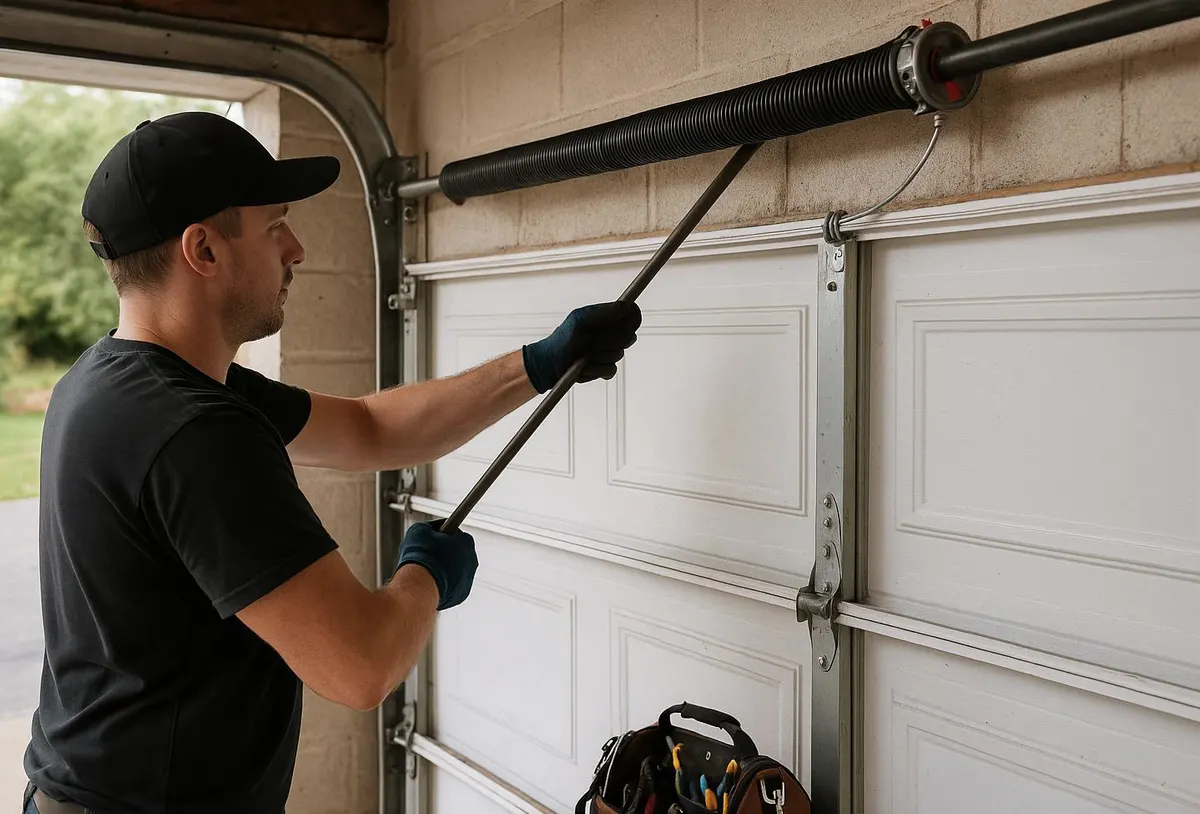
What a Technician Sees After a Storm Outage
After a hurricane-season outage knocks out power across Washington County, we get the same handful of calls. A homeowner yanked the emergency release cord straight down instead of pulling it toward the motor, and now the trolley is jammed sideways in the track. Someone forced a heavy door open by hand, strained a weak spring, and the door won't stay up on its own. Or the power came back, the opener hums but the door doesn't move, because the carriage never reconnected to the trolley. Most of this is avoidable if you know the order of operations before the next outage, not during it.
Tools You Need
- A sturdy step stool or short ladder (the release cord is usually just out of reach)
- A flashlight or headlamp, since garages lose their only light source along with the opener
- Work gloves, especially if your hardware has any rust from salt air or humidity
- Nothing else — no wrenches, no pliers, no prying tools. If you think you need those, stop and call a technician instead
Step-by-Step: Opening the Door Manually
- Locate the emergency release cord. It's the red handle hanging from a track that runs along the ceiling to the opener motor.
- Pull the cord down and toward the motor, not straight down. This disengages the trolley from the drive carriage so the door is no longer connected to the opener.
- Lift the door slowly using both hands, keeping it centered. A properly balanced door should rise with moderate, even effort and stay roughly where you leave it.
- If the door feels unusually heavy, jerks, or won't hold its position, stop immediately. That's a sign of a weak or broken spring, and forcing it can snap a cable or drop the door on your hands.
- Prop the door open if you need it up for more than a few minutes, using a clamp or locking pliers on the track below the bottom roller on each side, never your hands or a loose board.
Step-by-Step: Closing the Door Manually
- Lower the door by hand, guiding it down slowly rather than letting it drop.
- Make sure it seats fully on the floor with even contact along the bottom weatherstrip, not cocked to one side.
- Engage the manual lock bar if your door has one, especially if the outage coincides with an approaching storm. A door that's only resting shut, not locked, can rattle loose under sustained wind.
- During active storm winds, avoid repeated manual opening and closing. Wind-load-rated doors are built to resist pressure when properly closed and locked; opening them by hand in a gust puts stress the system isn't designed to handle in that state.
Re-Engaging the Opener After Power Returns
- Make sure the door is fully closed before you reconnect, so the opener doesn't suddenly try to move it from a half-open position.
- Pull the release cord toward the motor again, or in most units simply run the door with the wall button or remote. The trolley will automatically reconnect to the carriage, usually with an audible click, as the opener's next cycle pulls the slack out of the chain or belt.
- Test the door with the remote or wall button through one full open-and-close cycle, watching that it moves smoothly without grinding or hesitating.
- Test the safety reverse feature by placing a piece of wood on the ground in the door's path. The door should reverse on contact. If it doesn't, stop using the opener until that's repaired.
What You Can Handle vs. What Needs a Technician
Homeowners can safely pull the release cord, lift and lower the door by hand, prop it open temporarily, and reconnect the trolley once power is restored. What you shouldn't attempt yourself: forcing a door that won't lift smoothly, realigning a trolley that's stuck sideways in the track, straightening a bent track, or working on springs and cables under tension. In this climate, humidity swelling wood panels and salt air rusting pulleys and release hardware can make a door bind during manual operation in ways that look like a simple fix but aren't. If the door resists, grinds, or comes off the track at any point, stop and call for service rather than troubleshoot further.
When to Call Vernon Door & Opener
If your door won't balance correctly during a manual lift, feels heavier than it should, or came off the track while you were operating it by hand, that's a job for our Off Track Door Repair or Garage Door Spring Repair service rather than a DIY fix. We also recommend a Garage Door Maintenance & Tune-Up before hurricane season each year, we lubricate release hardware, check spring tension, and inspect rollers and cables so the manual release works the way it should when you actually need it during an outage.
If you're dealing with a stuck door, a damaged track, or want your system checked before the next storm rolls through Washington County, call Vernon Door & Opener. We serve Vernon, Bonifay, Chipley, Wausau, Ebro, Graceville, Westville, and Caryville, and we can usually get a technician out the same week.